What Is Latin? A Kid-Friendly Guide to the Ancient Language
Latin is one of the oldest and most important languages in world history. It comes from the Italic branch of the Indo-European language family, just like Celtic. Over time, many new languages grew out of Latin, including Spanish, French, Italian, Portuguese, Romanian, and more. These are now called the Romance languages, but they all began with Latin! This guide takes kids on a tour of the whole Latin world: where the language came from, the alphabet it gave us, the gods and myths of ancient Rome, how Roman children lived and played, and the food, music, festivals, and traditions still alive in the Latin region of Italy today.
A Language from the Time of Rome
Latin was first spoken in 753 B.C. by a small group of people living in and around Rome. As the Roman Empire grew stronger, Latin spread across Europe. During this time, two types of Latin were used:
- Classical Latin: A formal version used in writing, speeches, and poetry. It was taught in grammar and rhetoric schools.
- Vulgar Latin: A casual version people spoke every day. It sounded a bit different and wasn’t usually written down.
Later, a simpler version called Late Latin became popular. This helped spread Latin even further, especially through Christian writings and the early Catholic Church. Latin did not stay in Rome alone. During the Middle Ages, it became the main language for learning and sharing knowledge across many countries. Many famous old books and stories, called classics, were first written in Latin, which is one reason it is often called the language of scholars. It is also one of the most precise and efficient languages, meaning you can say a lot with just a few words. Because of this, Latin has had a huge influence on many modern languages, especially English.
The Latin Alphabet
The Latin alphabet we use today started with 21 letters, taken from the Etruscan writing system. Over time, new letters like G, J, U, W, Y, and Z were added. Classical Latin didn’t have lowercase letters, spaces between words, or punctuation!
Here are a few interesting facts about the Latin alphabet:
- The letter G was added later to replace the use of C in some words.
- Z was removed and then brought back after the Romans met the Greeks.
- W was created by writing V twice.
- J came from the letter I, and U came from V.
Eventually, the Classical Latin alphabet included 23 letters. Here are a few examples:
| Letter | Name (Latin) | Sound (IPA) |
|---|---|---|
| A | á / ā | /a/ |
| B | bé / bē | /be/ |
| C | cé / cē | /ke/ |
| D | dé / dē | /de/ |
| E | é / ē | /e/ |
| V | v́ / ū | /u/ |
| X | ex | /ks/ |
| Y | graeca | /irajka/ |
| Z | zéta / zēta | /zeta/ |
These letters helped build thousands of words still used in many modern languages!
Is Latin Still Used Today?
Yes! Latin may not be spoken every day, but it is far from gone. The Catholic Church uses Latin in its ceremonies, and many countries and schools still teach it. A lot of science and medical terms come from Latin. Many places, military groups, and universities also use Latin mottos, and you may have seen one like “Carpe Diem,” which means “Seize the Day.” From classrooms to spellbooks, Latin is hiding in plain sight. Here are five surprising ways it still lives on.
1. Latin Lives in English Words
Did you know that over 60% of English words come from Latin? Words like “animal,” “family,” and “important” all have Latin roots. So if you speak English, you are already using Latin every day! Even simple words like school and color have Latin origins, and many others come straight from a single root: aquarium comes from aqua (water), manual from manus (hand), and video from videre (to see). Words like diary, village, and video all trace back to Latin too.
2. Scientists and Doctors Still Use Latin
Biology, medicine, and even law still use Latin terms. “Homo sapiens,” “circulatory system,” and “habeas corpus” are just a few examples that come straight from ancient Rome. Learning a bit of Latin gives kids a head start in these fields later on.
3. Latin Is the Key to Romance Languages
If your child wants to learn Spanish, French, or Italian, starting with Latin can make it easier. These languages are all based on Latin, so the words and grammar will feel familiar from the start.
4. Latin Is All Over Movies and Books
Harry Potter spells like Expelliarmus or Lumos? Those are inspired by Latin! Writers use Latin to give their stories a magical, old-world feel.
5. You Can Still Learn Latin, and Have Fun Doing It!
Latin isn’t just for scholars. With modern platforms like Dinolingo, kids can explore Latin through animated lessons, games, and songs that turn a classical language into a playful learning journey.
Myths and Gods of Ancient Rome
A long time ago, the people of ancient Rome believed in many different gods and goddesses. These powerful beings were part of their daily lives. People prayed to them, told stories about them, and even named the days of the week and planets after them!
What Is the Pantheon?
The word Pantheon means “all the gods.” The Romans had a whole group of gods and goddesses they believed ruled over everything, from the sky and sea to love and farming. These stories were called myths and legends, and they helped explain the world around them.
Roman Gods and Goddesses
Some gods came from Greek myths, but the Romans gave them new names and their own special roles. Here are a few important ones:
- Jupiter: The king of the gods and god of the sky
- Juno: The queen of the gods and protector of families
- Mars: God of war
- Venus: Goddess of love and beauty
- Neptune: God of the sea
- Minerva: Goddess of wisdom and learning
- Diana: Goddess of the moon and animals
- Mercury: The speedy messenger god
- Ceres: Goddess of farming and crops
- Vulcan: God of fire and volcanoes
- Bacchus: God of wine and parties
- Vesta: Goddess of the home and hearth
There were hundreds of gods in Roman stories, and children loved reading about their powers, adventures, and sometimes their mistakes! Roman myths are more than just old stories: they help us understand what life was like in the past. By meeting gods like Jupiter, Venus, and Neptune, kids can travel back in time and explore Latin history in a magical way.
Daily Life for Roman Children
What was it like to be a kid in ancient Latium, the land around Rome where Latin was first spoken? From the classroom to the playground to the clothes they wore, life looked very different from today, yet some things have not changed at all.
Going to School in Ancient Latium
In ancient Latium, not every child had the chance to go to school. Education was something only wealthy families could afford. Poorer children stayed home to help their parents with work or were taught by their family. Only boys from rich families went to school regularly. Some families even hired private teachers, called schoolmasters, to come to their homes. These teachers were often Greek slaves who knew how to read and write in Latin and Greek.
Schools were small, usually just one room with about 12 students. Children didn’t have pencils or notebooks like today. Instead, they used wax tablets and a sharp stick to scratch in letters and numbers. They also read scrolls, which were long pieces of paper rolled up on sticks. To write on scrolls, they used reeds dipped in ink made from tar or octopus ink! Children learned to read, write, and do math. After age eleven, most girls stayed home to help with housework, while wealthier boys continued their education, studying Latin and Greek, grammar, literature, and even how to give speeches in public. Today, schools in Italy are modern and very similar to schools in other parts of Europe and North America, where kids of all backgrounds can learn math, science, reading, art, and more.
Children’s Games, Then and Now
Long before video games or cartoons existed, Roman children found joy in simple, creative ways. Much like kids today, they loved to stay active and use their imagination while playing with friends, pets, and handmade toys. Children played with dolls made from wax or clay and raced around on small carts pulled by goats, ponies, or even dogs. They flew handmade kites in the breeze and used stilts to walk taller than their friends. Hobbyhorses, hoops, and swings were among their favorite ways to pass time, and the seesaw was also a popular playground staple.
Board games and ball games kept their minds and hands busy. Kids enjoyed leapfrog, tic-tac-toe, and a game similar to modern-day jacks called knucklebones, played with small animal bones. Another favorite was “odd and even,” where one child hid stones in a hand and the other guessed if the number was odd or even. Physical play mattered too: Roman children practiced lifting weights, played war games with wooden swords, and jumped rope with friends, building strength and coordination while having fun outdoors. Pets were treasured companions in Roman homes, and dogs, birds, monkeys, and cats kept children company just like today’s pets.
Although the materials have changed, with clay and wax dolls becoming plastic and jacks now made of shiny metal, the spirit of play remains the same. Roman kids loved fun and friendship just as much as children do now. From rolling hoops to tic-tac-toe, many of their games have timeless appeal.
Latin Fashion, Then and Now
In ancient times, children in Latin-speaking areas dressed very similarly to adults. Their clothes were just smaller versions of grown-up outfits. These clothes changed depending on the region and time period, but they always had meaning and purpose, sometimes even magical protection! Boys wore tunics made of wool or linen. On a boy’s 16th or 17th birthday, he would wear a special white tunic to mark his “coming of age,” which meant he was now considered a citizen, and the celebration would end with a dinner party hosted by his father. Girls wore long tunics or togas that reached the ground, often dressing formally for ceremonies or special occasions. If a woman was married, she wore an extra garment called a stola over her tunic, held together with a belt and a large decorative brooch.
Both boys and girls wore a special necklace called a bulla. Inside the bulla was a tiny charm that was believed to protect children from evil spirits and jealousy. Girls wore their bulla until their wedding day, and boys wore it until their citizenship ceremony, though if they later became famous or honored, they might wear it again in a special parade. The toga was the most formal clothing for boys and men. It was first worn by itself, then later draped over a tunic, and over time it became more decorative and colorful, with kings, soldiers, and even chariot racers wearing different colors and designs. Capes and cloaks were added depending on the weather, and shoes and sandals made from leather or wood were worn by everyone. Women dyed their hair gold, black, or red, and some even wore wigs. Hair was curled using hot tools, shiny oils made it soft, and make-up was made from chalk, wine, and ash. Fans made from peacock feathers and parasols helped keep ladies cool on hot days.
Today, fashion in Italy and other places where Latin used to be spoken looks a lot like fashion in the rest of Europe or North America. Kids wear jeans, t-shirts, sneakers, and cozy coats, no togas required! Still, Latin fashion tells us a lot about what people believed and how they lived. From the bulla to the stola, every item had a purpose, and learning about ancient clothes is a fun way to imagine what life was like many years ago.
Lazio: Where the Latin World Lives On
Long ago, the land of central Italy around Rome was called Latium, the birthplace of the Latin language. Today that same region is known as Lazio, and it is full of life and opportunity. In the past it was a poor area, just like many other parts of the old Papal States, but now tourists love visiting, and farmers grow delicious vegetables and grapes that are turned into famous Italian wine.
From Farming to Film
Lazio is more than just farms and gardens. The region also has factories that make machines, clothes, medicine, and even books. Did you know that many famous movies are filmed here too? That’s right, Lazio is a big part of Italy’s movie-making magic!
A Cultural Treasure
Latium was home to many ancient civilizations, including the Romans. Today, you can still see the remains of these great cultures in the castles, churches, cathedrals, and monuments spread across the region. Lazio is also full of art, architecture, and music. Many people living here are Catholic, and religion continues to shape the community. Every year, towns in Lazio hold exciting events like Passion Plays (which tell the story of Easter), colorful parades, and even medieval-style jousting tournaments!
Sports in Lazio
If you like soccer, you might already know about Lazio’s most famous team, Società Sportiva Lazio. It was founded in the year 1900 and has been one of Italy’s most loved teams ever since!
Places to Visit in the Latin Region
The Latin area of Italy, which includes the Lazio region and towns around Rome, is full of history, beautiful churches, nature, and friendly people. There are many family-friendly places to explore:
- Monte Rufeno Nature Reserve offers hiking and nature adventures.
- Bullicame Hot Springs let you see bubbling water carved into white clay.
- Lake Bolsena has boat rides and swimming spots, plus you can visit Santa Cristina Church and the famous Gelateria Santa Cristina!
- Castello Ruspoli near Bolsena has magical gardens that haven’t changed since the 1600s.
- Civita di Bagnoregio is a tiny hill town where kids can cross a long bridge and explore handmade crafts and ancient homes.
Lazio is a place where the past and present meet. Whether it’s through music, festivals, sports, or food, this region continues to shape Italian culture in amazing ways. By learning Latin and exploring Lazio’s heritage, kids can better understand the roots of the modern world.
Food of the Latin Region
In the Latin region of Italy, food is more than just something to eat. It is a way to enjoy life, connect with family, and celebrate traditions. From spicy pasta sauces to garden-fresh vegetables, there is something delicious for everyone!
Vegetables are a big part of everyday meals in Lazio. Instead of plain veggies, people cook them with olive oil, garlic, and herbs like rosemary and parsley. Sometimes they even add anchovies to give the food a salty flavor, which makes the vegetables taste extra rich and savory. Meat is not the star of the meal here. When it is served, it is often beef or pork, but not the best cuts, usually cooked with lots of spices and herbs to add flavor. More common meats include chicken, rabbit, and even snails, which might sound strange but are considered a treat in some towns!
One of the most famous pasta dishes in the world, Spaghetti Carbonara, comes from this region. It is made with eggs, cheese, and sometimes bacon. Another popular sauce is called Arrabbiata, which means “angry” in Italian. Why angry? Because it is spicy, thanks to hot pepper flakes! Larger pasta shapes like bucatini (long, thick spaghetti with a hole in the middle) and conchiglie (shell-shaped pasta) are also favorites here, perfect for holding thick sauces and bold flavors.
Music, Songs, and Dance
The Latin region of Italy is home to a rich world of folk music and dance, and music is one of the most joyful ways for kids to connect with Latin culture. Long before apps and cartoons, children in ancient Latin-speaking regions learned through songs, rhymes, and lullabies passed down through generations, filled with love, rhythm, and early language learning.
What Did Latin Children Sing About?
Latin songs for children often focused on daily life, toys, nature, holidays, and family moments. Many were lullabies used at bedtime, chants sung in play, or rhymes learned by heart. The lyrics were calm, repetitive, and comforting, perfect for young minds to memorize and enjoy. Here are a few well-known examples of Latin children’s songs and their meanings:
- Dona Nobis Pacem: Give us peace
- Dormi Fili, Dormi!: Sleep, son, sleep!
- Lalla, Lalla, Lalla: A sweet lullaby
- Personet Hodie: This day resounds
- Veni Veni Emmanuel: O come, O come, Emmanuel
Some of these are lullabies, some are holiday songs, and others are joyful chants still sung in churches and schools around the world.
Folk Songs from the Latin Area
In the Latin region, folk songs come in many forms:
- Ballads tell dramatic or heartfelt stories.
- Lullabies are gentle songs sung to babies at bedtime.
- Children’s songs are playful and easy to remember.
- Seasonal and holiday songs celebrate nature, harvests, and traditions.
- Occupational songs reflect daily work in the fields, towns, or sea.
These songs are often sung by a solo performer, sometimes singing two or three parts alone, which makes them sound unique and expressive. Some religious songs are still performed in Latin, the ancient language that has influenced many modern tongues.
Instruments That Bring the Music to Life
The Latin area of Italy is especially known for its wide variety of folk instruments, more so than other parts of the country. Kids will enjoy discovering the interesting sounds and appearances of these musical tools:
- Zampogna (Italian bagpipe): Traditionally played around Christmas, it has a soft, buzzy sound.
- Organetto: A small, button accordion that brings a rhythmic beat to many dances.
- Clarinet and violin: Familiar instruments that blend beautifully in folk melodies.
Flag Dances and More: Movement in Folk Culture
Folk music in the Latin area is often paired with dancing. One special type is the flag dance, where dancers pass a town flag or ribboned pole around the neck, through the legs, behind the back, and even toss it in the air to catch it with flair! These dances may be performed solo or as part of a group during festivals and parades. For kids, learning a few simple moves to traditional music can be a joyful way to connect language and culture. Whether enjoying the sound of the zampogna or dancing like a flag twirler, kids can explore the heart of Italy through music.
Festivals and Holidays in the Latin Region
Throughout the year, towns and cities in the Lazio area host exciting festivals that bring people together with music, dancing, food, and colorful traditions. These festivals are a great way for kids to experience Italian culture in a joyful and memorable way.
Spring Celebrations and History
One of the first big celebrations of the year is Festa di Primavera, the Spring Festival. It includes music concerts and special tours of churches and monuments, a beautiful way to welcome the new season and explore important historical sites. Another big event is Natale di Roma, or the Birth of Rome Festival, held every year on April 21st. This festival honors the founding of Rome in 753 B.C. with parades, gladiator shows, feasts, dancing, beauty contests, and even fireworks. It’s like stepping back in time!
Sports, Nature, and the Sea
In Sabaudia, there’s a special event called Pasqua Degli Sportivi, or Sportsman’s Easter. This festival celebrates talented athletes and coaches from the Latina province, ending with a beautiful mass and an Easter blessing at Annunziata Church. If you visit in the summer, don’t miss the Festival of the Sea in Terracina, held in July and full of ocean-themed fun. Another great event is the Festival of Parks, Nature, and Fitness, where parks in Rieti become places to play, move, and enjoy the outdoors.
Celebrations for Saints and Traditions
The Latin region also honors many saints with special traditions. In Rieti, the Festa del Sole, or Sun Festival, celebrates light and joy. In Frosinone, the Festival of Ancient Flavors celebrates the Feast Day of Madonna dello Spirito Santo with delicious foods and local culture. In Pastena, people celebrate the Feast Day of St. Elena with the Resta Della S.S. Croce. In Bolsena, a special festival called I Misteri di Santa Cristina honors Saint Cristina with processions and stories. In Viterbo, the Processione di Santa Rosa is held every year to honor Saint Rose, the town’s patron saint, and a giant, lighted structure is carried through the streets, something kids will never forget!
Manners and Respect in the Latin Region
In the Latin region of Italy, people place great importance on good manners and polite behavior. From greetings to mealtime customs, there are many small habits that help show kindness and respect. For children learning about Italian culture, understanding these everyday actions is a fun and meaningful way to connect with the language and traditions.
Friendly Greetings and Goodbyes
When meeting someone in Italy, it’s important to greet them with a kind phrase like “Buongiorno” (Good day) or “Buonasera” (Good evening). If you’re meeting someone for the first time, you should shake hands with a firm handshake. Among friends and family, it’s common to greet each other with a kiss on both cheeks, first on the left, then on the right, a sign of warmth and closeness. When saying goodbye, children are encouraged to say polite phrases like “Have a good day!” or “See you soon!”
How to Behave in a Church
Italy is famous for its beautiful churches and cathedrals, especially in the Latin region. When visiting a church, kids and adults alike are expected to show respect:
- Dress properly by avoiding shorts, tank tops, or sleeveless clothes.
- Stay quiet and calm, especially during prayer or mass.
- Do not enter during a service unless invited or already seated.
These small actions help show appreciation for the sacred spaces and the people inside them.
Table Manners Matter
Meals are a big part of Italian culture, and families often follow traditional table rules. Everyone has their own plate, and it is not common to share food from one another’s dishes. Wine, beer, or other drinks are served to adults during meals. Meals are social and respectful, with conversation and care taken over how food is enjoyed. Children are usually taught early on to use good table manners, like waiting for others before eating, sitting properly, using cutlery correctly, and saying “Grazie” (Thank you) when served.
Visiting Someone’s Home
If you are invited to someone’s home for dinner in Italy, it’s polite to bring a small gift. Some good ideas include a bouquet of flowers, a box of chocolates, or a nice bottle of wine for the adults. Being on time is also very important, and arriving late without a reason can be seen as rude. Always remember to thank the host after the meal. Children may also notice that smoking is not allowed in public buildings, including restaurants, schools, and shops, a rule that helps keep places clean and healthy for everyone. With just a few simple habits, kids can feel more confident as they explore the Italian language and culture.
How to Teach Kids Latin
Teaching children Latin may sound like a big task, but with the right approach, it can be a fun and rewarding experience. Whether your child is just starting out or already knows a few words, the key is to make learning enjoyable and consistent.
Motivation Matters Most
Before anything else, children need to feel excited about learning. Motivated kids are more likely to enjoy Latin lessons and stay engaged. You can offer rewards like stickers or a trip to their favorite park for learning new Latin words, create little surprises (even classic games like peekaboo make lessons more fun for toddlers), and keep it playful with games like hide and seek, counting in Latin, or memory card games. The more fun you add, the easier it is for your child to stay focused.
Keep It Short, and Practice Often
If lessons are too long or difficult, kids may lose interest quickly. Instead, introduce just a few Latin words at a time to build confidence. Kids also need regular practice to remember what they have learned. Try mini quizzes during playtime (“Which one is equus?” while showing a horse and a dog), flashcards that build word-picture associations, and daily mini-conversations using simple words like salve (hello) or vale (goodbye) to turn normal moments into fun practice sessions.
Explore Latin in the Real World
Look for chances to connect Latin learning with your child’s environment. Hang posters of Latin words or letters, try puzzles or toys labeled in Latin, or make a Roman-themed costume together. Connecting with other kids who are learning Latin through study groups or sibling activities can boost confidence and encourage cooperation too.
Fun Activities for Curious Kids
Try a Latin Word Hunt: send kids on a “Latin root” scavenger hunt around the house. Can they find items like aqua (water), luna (moon), or terra (earth)? Build a Word Family Tree by choosing a Latin root like scrib- (to write) and growing it into “scribble,” “describe,” and “inscription.” Play the Latin Labeling Game by labeling common classroom or home objects with both their English name and Latin root, such as aqua for water. These simple games make Latin feel active and playful, even though it is not spoken in daily life.
Learn Latin with Dinolingo
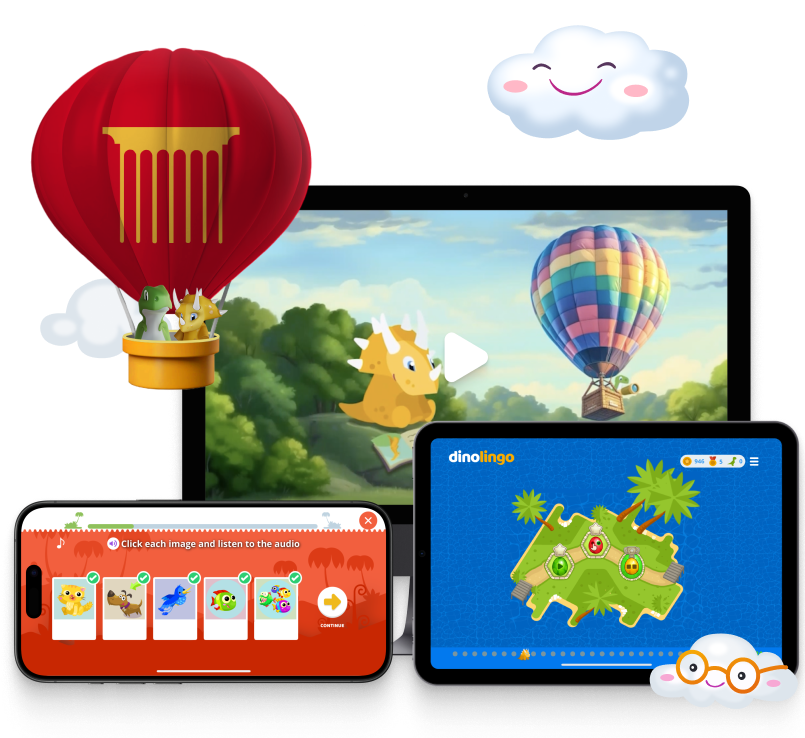
Kids can explore Latin today in a fun way! Dinolingo offers online Latin lessons with songs, videos, stories, and games. Whether children are learning Latin for school, history, or just curiosity, Dinolingo makes it simple and exciting for kids ages 2 to 14. Learning paths are tailored to pre-readers, elementary, and middle school kids through a gamified system full of surprises and rewards, with a full library of animated videos, songs, printable worksheets, flashcards, and stories. One subscription covers the whole family with access to over 50 languages on web, iOS, and Android, plus offline materials and a helpful parent dashboard.
Latin may be an ancient language, but it still shapes our world today. From modern vocabulary to school mottos, from Roman myths to the food and festivals of Lazio, Latin lives on. And thanks to tools like Dinolingo, even young learners can enjoy discovering the magic of this timeless language.